Accessibility and image context · reviewed August 5, 2026
Product image alt text that describes the useful difference.
Write concise, contextual descriptions for meaningful product images without turning them into keyword fields.
Quick answer
How should you write alt text for a product image?
Describe the information the image contributes in its current context. Name the product and the meaningful view, material, color, feature, or setting that a user would otherwise miss. Keep it concise and avoid starting with phrases such as image of when that information is already implied.
Alt text is primarily an accessibility feature. It can also help search engines understand an image, but repeating every keyword, SKU, and marketing claim creates a worse experience and weaker context.
Platform rules and interfaces can change. Use the linked primary sources as the final authority, then test the result in the marketplace or storefront you actually use.
A practical formula
Product + distinguishing detail + relevant context.
For a hero image, name the item and the visible variation: “Cream speckled ceramic mug with heart imprint.” For a detail image, describe what changes: “Close-up of the mug’s unglazed clay base and speckled glaze.”
For a lifestyle image, include the setting only when it communicates useful information: “Insulated travel cup standing upright in an open gift box.” Do not describe every leaf or shadow unless it affects the image meaning.
- Hero: product name plus visible variant
- Detail: product plus feature being demonstrated
- Lifestyle: product plus meaningful use or setting
- Packaging: product plus included package or quantity
Write for the image role
Make related images distinct without repeating everything.
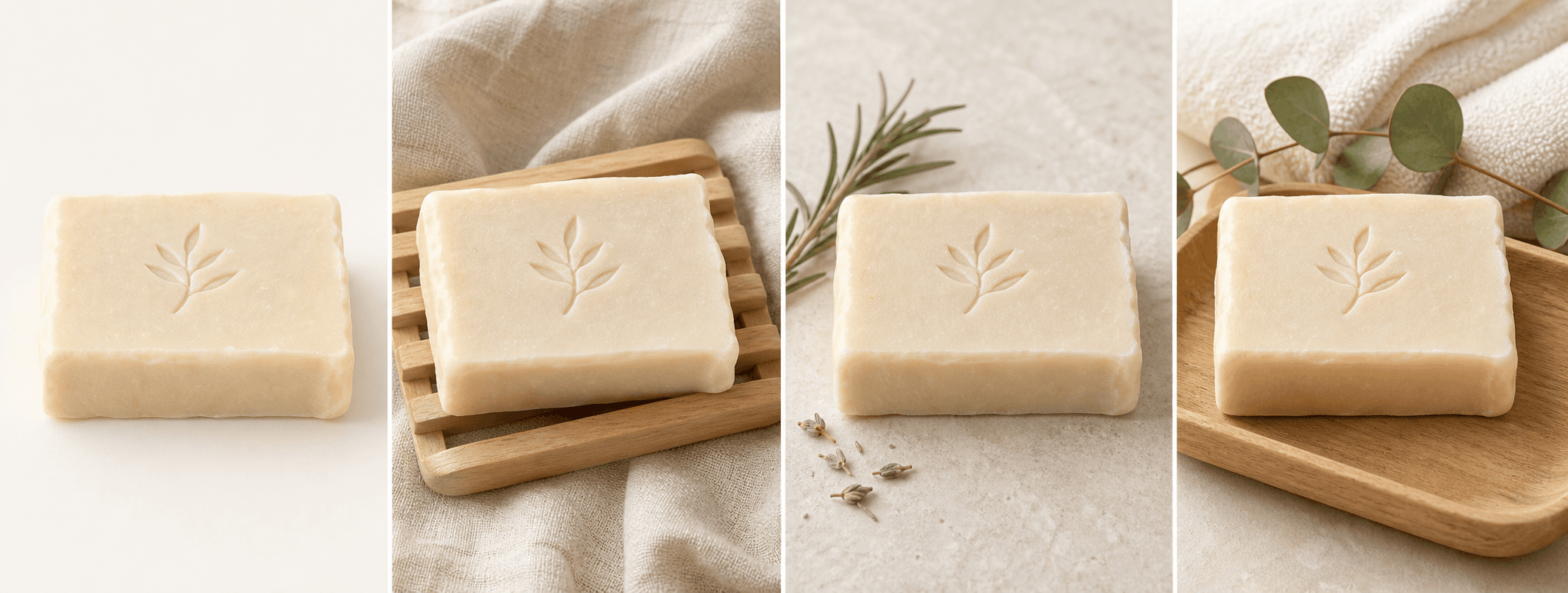
A gallery of six product views should not use the same alt text six times. Keep the stable product name, then identify the unique angle or information: front label, side closure, interior pocket, material texture, dimensions in hand, or gift packaging.
Do not include facts that are not visible. Price, shipping, sustainability claims, and technical specifications belong in page copy unless the image genuinely communicates them and the description needs that context.
- Good: “Black canvas tote showing interior zip pocket”
- Weak: “Tote bag product image best tote bag online”
- Good: “Amber candle jar lit on a bedside table”
- Weak: “Image of beautiful amazing luxury candle”
Know when to stay silent
Use empty alt text for genuinely decorative images.
If an image adds no information and the same content is already available next to it, empty alt text can prevent unnecessary repetition for screen-reader users. A functional image link or button needs an accessible name that describes the action instead.
Review the page without images. If losing the image removes product information, write alt text. If nothing meaningful changes, the image may be decorative.
Do not omit alt attributes entirely. Use a deliberate description or an intentional empty value based on the image purpose.
Before you publish
Product image alt text checklist
Run this sentence-level review before publishing.
- The description matches the image purpose in this page context.
- The real product and distinguishing view are clear.
- The text is concise and avoids redundant “image of” wording.
- No invisible claims, keyword lists, or promotional filler were added.
- Different product views have meaningfully different descriptions.
- Decorative images use intentional empty alt text.
Primary references